
Currently Empty: ₹0.00


Professional cleaning chemicals play a critical role in maintaining hygiene, safety, and surface durability across homes, offices, hotels, hospitals, and industrial facilCleaning chemicals are essential for maintaining hygiene in homes, offices, hospitals, and industries. In India, different types of cleaning chemicals are used depending on the surface, dirt type, and hygiene requirements.
In this guide, you will learn:
- Complete cleaning chemicals list used in India
- Types of cleaning chemicals with examples
- Industrial vs household cleaning products
- How to choose the right chemical for each surface
- Safety, dilution, and buying tips for 2026
Whether you are a facility manager, housekeeping professional, or business owner, this guide will help you choose the right professional cleaning chemicals for effective and safe cleaning.
For organizations requiring reliable bulk supply and consistent quality, professional formulations are manufactured and supplied by trusted industrial cleaning chemicals manufacturers in India such as Satyadev Industries.
⭐ Cleaning Chemicals List in India (2026)
| Type | Example | Use |
|---|---|---|
| Acidic Cleaners | Toilet cleaner (HCl) | Remove hard water stains |
| Alkaline Cleaners | Degreasers | Remove oil & grease |
| Neutral Cleaners | Floor cleaners | Daily cleaning |
| Disinfectants | Sodium hypochlorite | Kill germs |
| Solvent Cleaners | Alcohol-based | Remove ink/oil |
📑 Table of Contents
- Introduction to Professional Cleaning Chemicals in 2026
- What Are Cleaning Chemicals?
- Types of Cleaning Chemicals & Professional Formulations Explained
- Cleaning Chemicals Needed for Every Area
- How Cleaning Chemicals Work (Science Behind Them)
- List of Common Cleaning Chemicals Used in India
- Who Should Use Professional Cleaning Chemicals?
- Why Cleaning Chemicals Are Important in 2026
- Top Cleaning Chemical Brands in India – Comparison Guide
- Types of Cleaning Chemicals Explained by pH & Application
- Common Cleaning Products and Their Uses
- Household vs Commercial vs Industrial Cleaning Chemicals
- Cleaning Chemical Concentrates vs Ready-to-Use Products
- How to Choose the Right Cleaning Chemical
- Are Cleaning Chemicals Safe?
- Eco-Friendly and Non-Toxic Cleaning Solutions
- Top Mistakes to Avoid When Using Cleaning Chemicals
- Professional Cleaning Chemicals Used in Hotels, Hospitals & Industries
- Which Cleaning Solution Is Right for You?
- Free Download – Complete Cleaning Chemicals Guide (PDF)
- Frequently Asked Questions on Cleaning Chemicals
- Conclusion: Choosing the Right Cleaning Chemical in 2026
- Related Cleaning Chemical Solutions & Product Links
- References, Industry Standards & Author Information
What Are Cleaning Chemicals?
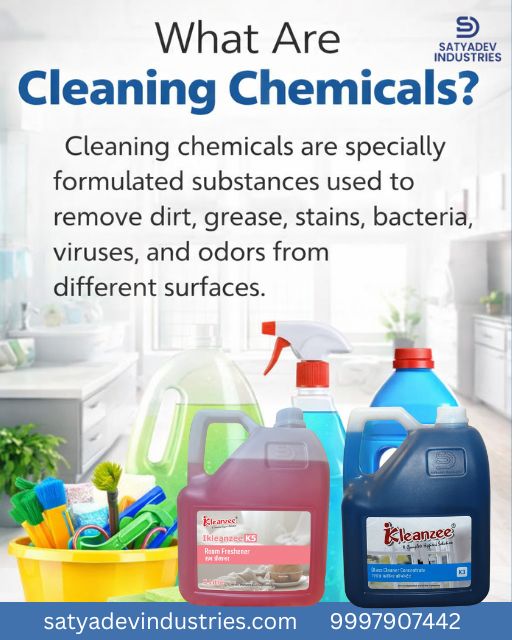
Cleaning chemicals are specially formulated substances used to remove dirt, grease, stains, microorganisms, and odors from surfaces to maintain hygiene and safety in homes, commercial spaces, hospitals, and industries. These products include acidic cleaners, alkaline degreasers, neutral floor cleaners, disinfectants, and solvent-based formulations designed for specific cleaning applications.
In professional environments, concentrated cleaning chemicals are preferred because they provide:
- Faster and deeper cleaning performance
- Better germ control and hygiene compliance
- Lower cost per use through dilution control
- Safe application when used with proper instructions
Types of Cleaning Chemicals & Professional Formulations Explained
Understanding the difference between cleaning chemicals, cleaning agents, disinfectants, and finished professional formulations helps businesses choose the right solution for effective hygiene, safety, and cost control.
Cleaning Chemicals vs Cleaning Agents vs Disinfectants
| Term | Primary Purpose | Typical Use Areas | Example |
|---|---|---|---|
| Cleaning Chemicals | Remove dirt, grease, stains | Homes, offices, industries | Floor cleaners, degreasers |
| Cleaning Agents | General cleaning action | Daily surface cleaning | Detergents, surfactants |
| Disinfectants | Kill bacteria & viruses | Hospitals, washrooms | Surface sanitizers |
| Sanitizers | Reduce microbial count | Food areas, kitchens | Hand & surface sanitizers |
📌 Note: Professional hygiene programs usually require a combination of cleaners and disinfectants, depending on the surface type, soil level, and infection risk.
🔹 Finished Cleaning Chemicals vs Raw Chemical Suppliers
Another important distinction is between ready-to-use professional cleaning formulations and individual raw chemical materials used for manufacturing.
| Aspect | Finished Cleaning Chemicals (Your Blog Focus) | Raw Chemical Suppliers (Aseschem Style) |
|---|---|---|
| Product Type | Ready-to-use or concentrated formulations | Individual raw materials |
| Buyer Type | Hotels, hospitals, offices, industries | Chemical formulators & manufacturers |
| Ease of Use | Direct application with dilution guide | Requires formulation expertise |
| Safety Documentation | MSDS + usage instructions | MSDS only |
| Compliance | Designed for hygiene standards | Not application-specific |
| Time to Use | Immediate | Requires processing |
| Best For | Facility managers & housekeeping | Chemical manufacturers |
📌 Why this matters:
Most commercial facilities prefer finished professional cleaning chemicals because they are:
- Safer and easier to use
- Compliant with hygiene standards
- Cost-effective in concentrated form
- Supported by technical guidance and documentation
For this reason, businesses typically source products from a reliable industrial cleaning chemicals manufacturer in India to ensure consistent quality, safety compliance, and long-term performance.
Cleaning Chemicals Needed for Every Area (Room-Wise Guide)
| Area / Room | Cleaning Chemical Type | Example Use |
|---|---|---|
| Kitchen | Alkaline degreaser | Stove, chimney, tiles |
| Bathroom | Acidic cleaner | Toilet, basins, hard water stains |
| Living Area | Neutral cleaner | Floors, furniture |
| Glass & Mirrors | Glass cleaner | Windows, partitions |
| Office Spaces | Neutral + disinfectant | Desks, floors |
| Industrial Areas | Heavy-duty alkaline | Machinery, floors |
How Cleaning Chemicals Work (Science Behind Them)
Cleaning Action vs Chemical Type
| Cleaning Action | Chemical Type | Example Use |
|---|---|---|
| Soil lifting | Surfactants | Floor & surface cleaners |
| Grease removal | Alkalis | Kitchen degreasers |
| Mineral removal | Acids | Toilet & bathroom cleaners |
| Germ control | Disinfectants | Hospitals & clinics |
| Oil dissolution | Solvents | Factories & workshops |
The professional cleaning solutions are based on a regulated chemical reaction between active components and the type of soil. Surfactants separate and suspend dirt, acids dissolve mineral deposits, alkalis dissolve grease, solvents dissolve oils and disinfectants dissolve the structure of microbial cells.
The success of any formulation is determined by:
- pH level
- Correct dilution
- Contact time
- Surface compatibility
The knowledge of these fundamentals will enable business to prevent surface damage, enhance the results of hygiene, and cut the expenses of cleaning in the long-term.
List of Common Cleaning Chemicals Used in India
Professional cleaning formulations are made using specific chemical ingredients designed to remove different types of soil such as grease, mineral deposits, stains, and microorganisms. Below is a simplified list of commonly used cleaning chemicals in India across homes, hotels, hospitals, and industries.
🔹 Common Cleaning Chemical Ingredients & Their Uses
| Chemical Name | Cleaning Function | Common Use Area |
|---|---|---|
| Sodium Hypochlorite | Disinfection & bleaching | Hospitals, toilets, floors |
| Hydrochloric Acid (HCl) | Removes hard water stains & limescale | Toilets, urinals, bathroom tiles |
| Surfactants (LABSA, SLES, Non-ionic) | Loosen dirt & grease | Floor cleaners, detergents, surface cleaners |
| Quaternary Ammonium Compounds (Quats) | Germ killing & sanitizing | Hospitals, kitchens, food areas |
| Isopropyl Alcohol / Solvents | Removes oil, ink & residue | Glass, electronics, machinery |
| Caustic Soda / Alkalis | Heavy grease removal | Kitchens, factories, workshops |
| Citric Acid | Mild descaling & eco-friendly cleaning | Bathrooms, appliances |
| Pine Oil & Fragrance Oils | Deodorizing & light disinfection | Floor cleaners, room fresheners |
Understanding the base chemicals helps buyers choose safe, effective, and surface-compatible professional cleaning products instead of generic retail cleaners.
Who Should Use Professional Cleaning Chemicals?
- Hotels & HORECA facilities
- Hospitals & clinics
- Offices & IT parks
- Factories & warehouses
- Malls & commercial buildings
- Professional housekeeping agencies
Professional buyers prefer sourcing from a reliable Professional Cleaning Chemicals Manufacturer in India for consistent quality and compliance.
Why Cleaning Chemicals Are Important in 2026
Professional Cleaning Chemicals vs Household Retail Products
| Parameter | Household Retail Products | Professional Cleaning Chemicals |
|---|---|---|
| Concentration | Low | High |
| Cost per Use | High | Low |
| Cleaning Speed | Slow | Fast |
| Dilution Control | Not available | Adjustable |
| Hygiene Compliance | Limited | High |
| Ideal Usage | Homes | Hotels, hospitals, offices |
| Long-term Cost | Expensive | Cost-efficient |
With increasing footfall in commercial spaces and stricter hygiene regulations, professional cleaning solutions are essential for infection control, asset protection, and operational efficiency.
📊 Cleaning Chemicals Market Trends & Usage Data (2025–2026)
| Metric | Data Insight (2026) | Why It Matters for Buyers |
|---|---|---|
| Global Professional Cleaning Market Size | USD 95+ Billion | Indicates strong long-term demand and innovation |
| India Institutional Cleaning Market Growth | 8–9% CAGR | Shows rapid adoption in hotels, hospitals & offices |
| Commercial vs Household Usage | 62% Commercial / 38% Household | Professional-grade products dominate demand |
| Concentrated Product Adoption | 70%+ in commercial facilities | Cost savings & controlled dilution |
| Eco-Friendly Product Demand | ↑ 40% since 2022 | Sustainability now impacts purchase decisions |
| Hospital & Healthcare Usage | Highest chemical consumption | Hygiene compliance drives buying |
📌 Insight: Facilities increasingly prefer concentrated, professional-grade formulations supplied by experienced industrial manufacturers.
📈 2026 Buying Statistics: Cleaning Chemicals Comparison Table
| Buying Factor | Household Buyers | Commercial Buyers | Industrial Buyers |
|---|---|---|---|
| Purchase Frequency | Monthly | Weekly | Bulk / Contract-based |
| Preferred Form | Ready-to-use | Concentrates | High-strength concentrates |
| Cost Sensitivity | High | Medium | Low (performance-focused) |
| Safety Priority | Moderate | High | Very High |
| Dilution Control | Not required | Required | Mandatory |
| Eco-Compliance Demand | Growing | Strong | Regulatory-driven |
| Supplier Preference | Retail brands | Professional suppliers | Industrial manufacturers |
📌 2026 Trend:
Businesses prioritize performance, safety documentation (MSDS/SDS), and consistent supply over brand familiarity.
2026 Buying Decision Factors
| Decision Factor | Priority Level |
|---|---|
| Safety documentation | Very High |
| Concentration | High |
| Eco compliance | High |
| Brand | Medium |
| Price | Medium |
Key benefits of professional cleaning products:
- Effective removal of heavy soil, grease, and stains
- Reduction of bacteria and viruses on high-touch surfaces
- Extended life of floors, tiles, fixtures, and equipment
- Lower long-term cleaning costs through concentrated formulations
The shift toward safe and eco-friendly cleaning products in 2026 also helps reduce health risks and environmental impact.
Also read our blog on : Top HORECA Cleaning Products in India 2026 – Quality and Trust
Top Cleaning Chemical Brands in India – Comparison Guide (2026)
Choosing the right manufacturer is important for performance, safety compliance, and long-term cost efficiency. Below is a neutral comparison of well-known professional cleaning chemical brands used in India.
🔹 Professional Cleaning Brands Comparison
| Brand | Best Known For | Ideal Users | Price Level |
|---|---|---|---|
| Diversey / Taski | International hygiene systems & machines | Large hotels, hospitals, corporates | High |
| Lizol / Retail Brands | Household disinfectants & floor cleaners | Homes & small offices | Medium |
| Satyadev Industries | Concentrated professional cleaning chemicals in India | Hotels, industries, institutions | Cost-efficient |
🔹 Key Buying Difference
- International brands → strong reputation but higher cost per use
- Retail brands → convenient but low concentration
- Professional Indian manufacturers → balanced performance, compliance, and bulk affordability
For businesses seeking reliable supply, MSDS compliance, and concentrated formulations, sourcing from a professional cleaning chemicals manufacturer in India is often the most cost-effective long-term solution.
Types of Cleaning Chemicals Explained
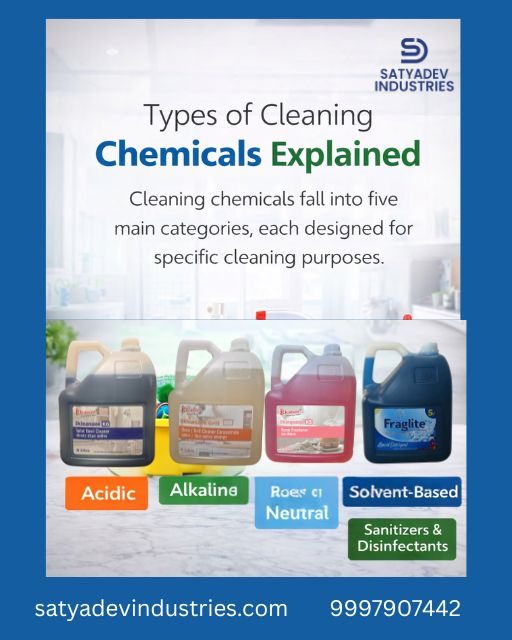
Cleaning formulations are broadly classified based on pH level, cleaning action, and application area.
The main categories include acidic, alkaline, neutral, solvent-based cleaners, and disinfectants, each designed for specific surfaces and soil types.
Types of Cleaning Chemicals & Best Uses
| Type | pH Range | Best Used For | Avoid On |
|---|---|---|---|
| Acidic | 0–6 | Hard water stains, toilets | Marble |
| Neutral | ~7 | Daily floor & surface cleaning | Heavy grease |
| Alkaline | 8–14 | Kitchens, oils, grease | Soft metals |
| Solvent-based | N/A | Adhesives, ink, oil | Painted surfaces |
| Disinfectants | Varies | Germ-prone areas | Delicate fabrics |
Acidic Cleaning Solutions
Acidic cleaners are specifically designed to remove hard water stains, limescale, rust, and mineral deposits, making them ideal for washrooms and sanitary areas
Common applications:
- Toilets
- Bathroom tiles
- Urinals
- Washbasins
Professional bathrooms require a high-qualitybathroom cleaner chemical to remove soap scum, limescale, and odor effectively.Explore K1 Bathroom Cleaner Concentrate, K6 Toilet Cleaner, and K9 Hard Water Stain Remover specially formulated for bathroom cleaning.
Alkaline Cleaning Agents
Alkaline formulations effectively break down oil, grease, fats, and protein-based residues, making them essential for kitchens and food preparation areas.
Common applications:
- Kitchen floors
- Ovens and grills
- Exhaust systems and chimneys.
The majority of commercial kitchens use a heavy-duty kitchen degreaser to better and quicker remove grease.
Neutral Cleaning Formulations
Neutral cleaners are mild, surface-safe formulations ideal for daily cleaning where damage prevention and finish protection are important.
Common applications:
- Marble and tile floors
- Furniture
- Painted surfaces
A commercial floor cleaner concentrate is perfect to maintain the hotel and office in a regular condition.
Acidic vs Alkaline vs Neutral Cleaners
| Feature | Acidic | Alkaline | Neutral |
|---|---|---|---|
| Removes | Limescale, rust | Grease, fats | Light dirt |
| Surface Safety | Medium | Low–Medium | High |
| Daily Use | No | ❌ | Yes |
| Commercial Use | Yes | ✅ | yes |
Solvent-Based Cleaning Agents
Oil, adhesive, ink, and industrial grease are all dissolved in solvent cleaners, which are very popular in factories and workshops.
Disinfectants and Sanitizers
Bacteria and viruses are killed by disinfectants and are needed in hospitals, clinics, food preparation stations and washrooms used by the public.
Common Cleaning Products and Their Uses
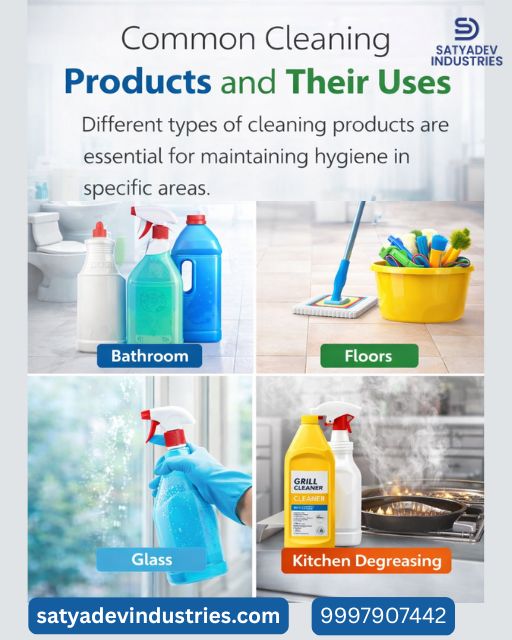
Different surfaces require purpose-specific cleaning formulations to ensure effective results without surface damage. Below are commonly used professional cleaning products and their applications.
Product vs Surface
Cleaning Product Selection Guide
| Surface | Recommended Product | Frequency |
|---|---|---|
| Bathroom tiles | Acidic bathroom cleaner | Weekly |
| Toilet bowls | Acidic disinfectant | Daily |
| Floors | Neutral floor cleaner | Daily |
| Glass | Alcohol-based glass cleaner | As needed |
| Kitchen equipment | Alkaline degreaser | Daily |
Cleaning Chemical products in bathrooms
Bathroom Cleaning Products Comparison
| Problem | Recommended Product Type | Frequency | Notes |
|---|---|---|---|
| Hard water stains | Acidic cleaner | Weekly | Use gloves |
| Toilet odor | Toilet bowl cleaner | Daily | Do not mix |
| Tiles & fittings | Bathroom cleaner | Regular | Non-abrasive |
The cleaners remove the soap scum, stains, and smells of tiles, basins and fittings. A cleaner chemical used by a professional bathroom cleaner will guarantee cleaning without the damage of the surface.
Explore K1 bathroom cleaner concentrate , K6 toilet cleaner and K9 hard water stain remover specially formulated for bathroom cleaning
For a detailed explanation of formulations, safety, and professional usage, read our bathroom cleaning chemicals expert guide.
Floor Cleaning Chemicals
Floor Type vs Recommended Cleaner
| Floor Type | Recommended Cleaner | Frequency |
|---|---|---|
| Marble | Neutral floor cleaner | Daily |
| Granite | Neutral cleaner | Daily |
| Tiles | Mild alkaline | Alternate days |
| Epoxy | Industrial floor cleaner | As needed |
Floor cleaners provide shine and cleanliness to marble, granite, tiles, vinyl and epoxy floors. The professional cleaners also favour using floor cleaner concentrate in commercial cleaning as they have more control over dilution and it is more cost effective.
Explore K7 floor cleaner concentrate.
For heavy-duty factories, warehouses, and commercial facilities, choosing the right formulation is critical. Read our expert guide on the best industrial floor cleaner liquid in India to understand features, safety, and performance.
Glass Cleaning Chemicals
Glass cleaners are used to take off fingerprints, dust and water stains on mirrors, windows and glass partitions. A glass cleaner liquid in the form of streak free gives great clear and spotless results.
Explore K3 glass cleaner concentrate
Kitchen Degreasing Chemicals
Kitchen Degreaser Strength Comparison
| Area | Degreaser Strength | Application |
|---|---|---|
| Chimney | Heavy-duty | Weekly |
| Stove | Medium | Daily |
| Exhaust | High alkaline | Monthly |
| Countertops | Mild degreaser | Daily |
Kitchen degreasers will clean cooking apparatus of carbon deposits, oil, and food residue. A heavy duty kitchen degreaser saves time on scrubbing, as well as enhancing hygiene.
Explore iKleanzee Grill for kitchen degreasing.
To understand real-life usage across different spaces, read our complete guide on top 10 cleaning chemicals you need in every room.
Household vs Commercial vs Industrial Cleaning Chemicals – Key Differences
Cleaning requirements vary significantly between homes, offices, and industrial facilities.
The difference lies in cleaning strength, concentration, safety compliance, and scale of use, which directly affects product selection and long-term cost efficiency.
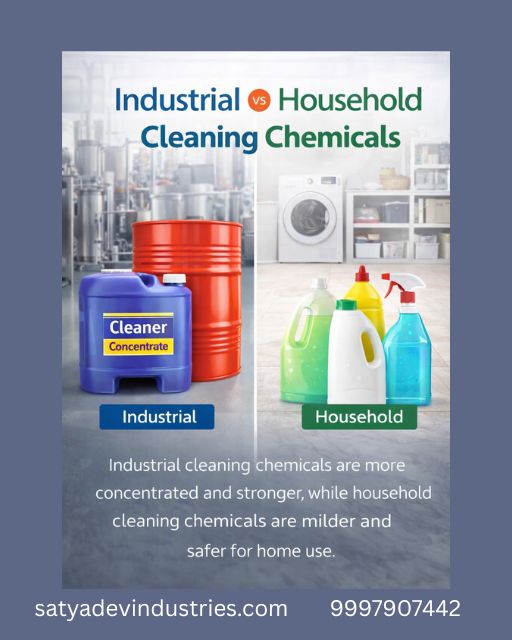
🔹 Comparison of Cleaning Chemicals by Usage Environment
| Parameter | Household Cleaning Chemicals | Commercial Cleaning Chemicals (Offices, Hotels) | Industrial Cleaning Chemicals (Factories, Warehouses) |
|---|---|---|---|
| Cleaning Strength | Mild | Medium to high | Heavy-duty |
| Formulation Type | Ready-to-use | Concentrated or ready-to-use | High-strength concentrates |
| Dilution Requirement | Not required | Required for cost control | Mandatory for safe use |
| Safety Documentation (MSDS/SDS) | Usually not provided | Required | Strictly mandatory |
| Hygiene Compliance Level | Basic cleanliness | Professional hygiene standards | Regulatory & safety-driven |
| Purchase Pattern | Retail bottles | Bulk canisters / contracts | Drum-level industrial supply |
| Cost per Use | Higher over time | Moderate | Lowest at scale |
| Typical Use Areas | Homes, kitchens, bathrooms | Offices, hotels, hospitals | Machinery, heavy floors, production areas |
🔹 Key Insight for Buyers
- Household cleaners focus on convenience and fragrance rather than deep performance.
- Commercial cleaning chemicals balance hygiene compliance, safety, and cost efficiency, making them ideal for offices, hotels, hospitals, and HORECA facilities.
- Industrial formulations are designed for heavy grease, oil, and large-scale cleaning, where performance and regulatory safety are more important than fragrance or packaging.
Because of these requirements, large facilities usually purchase from a professional industrial cleaning chemicals manufacturer in India to ensure:
- Consistent bulk supply
- Proper dilution guidance and MSDS documentation
- High-performance concentrated formulations
- Long-term cost savings in commercial operations
Also read our blog on : Top Industrial Cleaning Chemicals Suppliers in India — 2025 Guide to the Best Manufacturers
Cleaning Chemical Concentrates vs Ready-to-Use Products
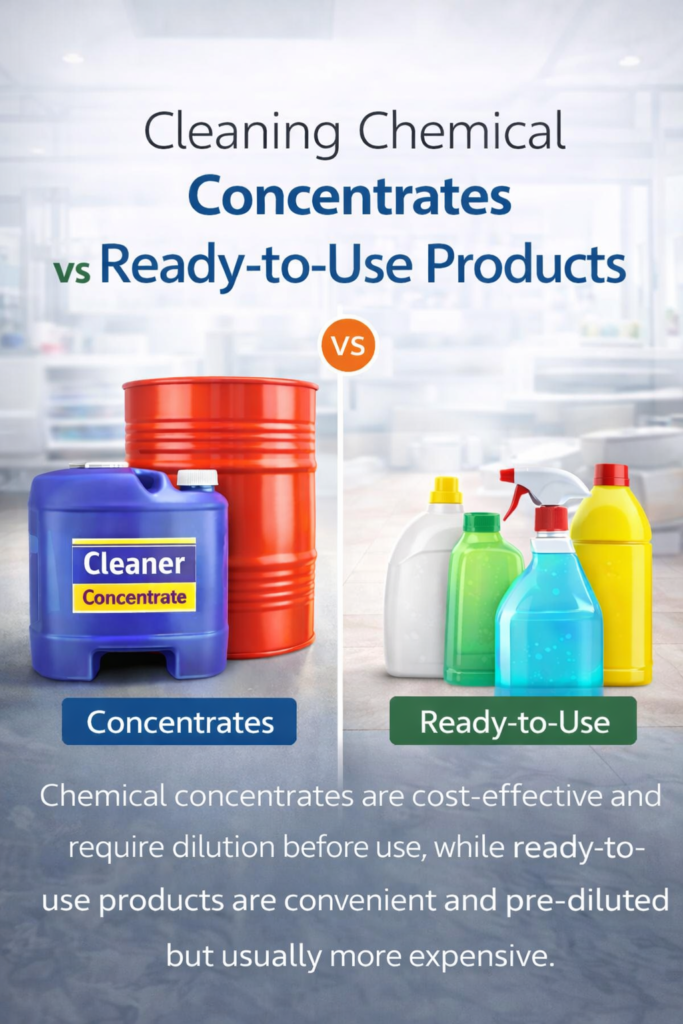
Cleaning solutions are generally safe when used correctly according to manufacturer instructions.
| Parameter | Cleaning Chemical Concentrates | Ready-to-Use Cleaners |
|---|---|---|
| Cost Efficiency | Very high | Moderate |
| Storage Space | Low | High |
| Dilution Control | Adjustable | Fixed |
| Ideal For | Hotels, hospitals, factories | Homes |
Understanding cleaning chemical concentrates vs ready to use products helps reduce long-term cleaning costs.
How to Choose the Right Cleaning Chemical
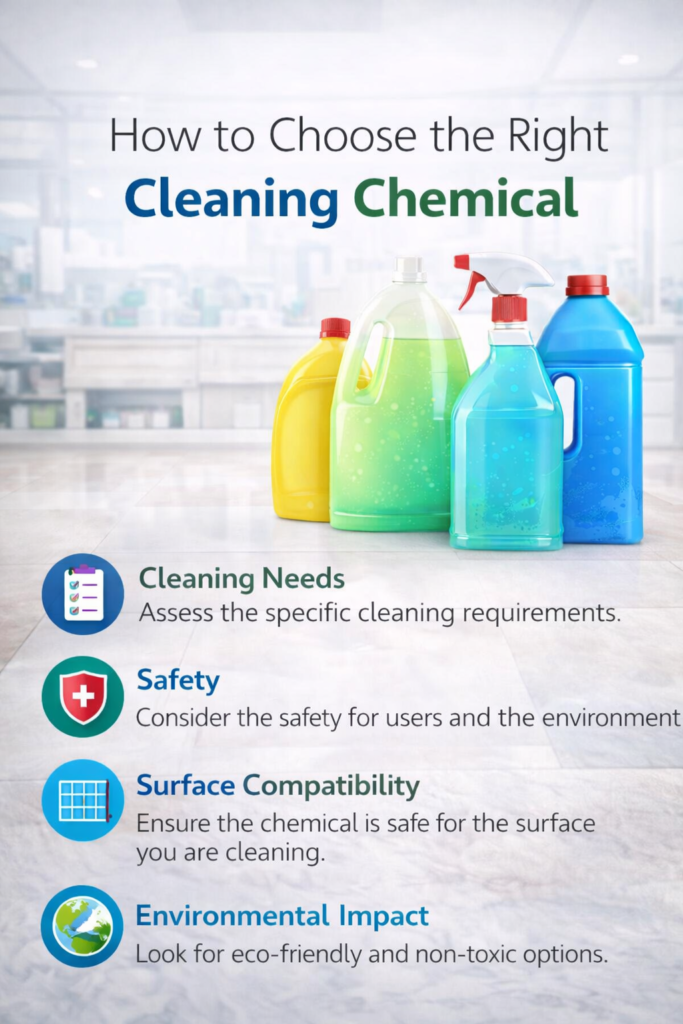
Identify the Surface
The surfaces have varying pH preference. As an illustration, bathroom stains are better cleaned with acidic cleaners whereas floors are best cleaned with neutral cleaners.
Understand the Type of Dirt
- Grease and oil: Alkaline cleaners
- Hard water stains: Acidic cleaners
- Light soil and dust: Neutral cleaners
Focus on Safety
In the selection of safe and eco friendly cleaning products , always select the products that have clear instructions and MSDS.
Compare Cost vs Performance
The quality of the concentrates cleanses more space with less product hence is cost-effective in the long-run
Are Cleaning Chemicals Safe?
Safety Gear vs Chemical Type
| Chemical Type | Gloves | Mask | Ventilation |
|---|---|---|---|
| Acidic | ✅ | ✅ | ✅ |
| Alkaline | ✅ | ❌ | ✅ |
| Disinfectants | ✅ | ✅ | ✅ |
Professional cleaning formulations are safe when used at recommended dilutions and according to manufacturer guidelines.
Common risks of improper use:
- Skin and eye irritation
- Toxic fumes caused by mixing incompatible chemicals.
- Permanent surface damage
Always use protective gloves, ensure ventilation, and follow dilution instructions.
Eco-Friendly and Non-Toxic Cleaning Solutions
Eco-Friendly vs Conventional Cleaning Chemicals
| Feature | Conventional Chemicals | Eco-Friendly Cleaning Solutions |
|---|---|---|
| Biodegradability | Low | High |
| Odor | Strong | Mild |
| Skin Safety | Moderate risk | Safer |
| Environmental Impact | Higher | Lower |
| Compliance | Optional | Preferred in 2026 |
| Ideal For | Industrial use | Schools, hospitals, green buildings |
When it comes to cleaning chemicals, most of the facilities in 2026 will be inclined towards the use of safe, and environmentally friendly cleaning products which are biodegradable, low scent, and less harmful to their daily use. These products can be used in green buildings, schools and in the health care facilities.
Top Mistakes to Avoid When Using Cleaning Chemicals
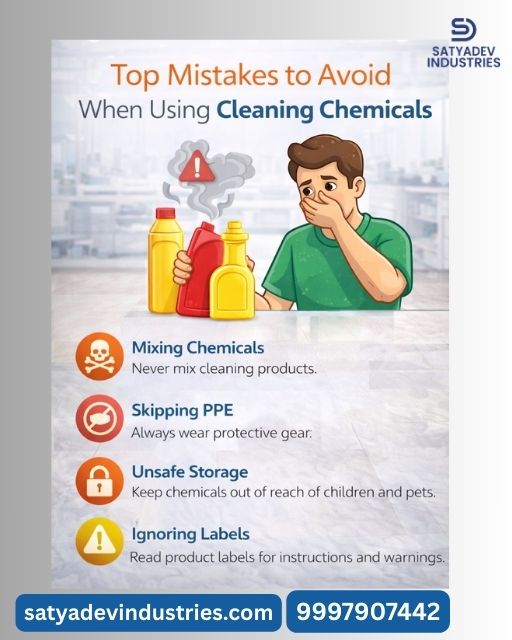
- Combining acidic and chlorine cleaners.
- Being over concentrated.
- The use of inappropriate chemical on delicate surfaces.
- Violation of safety instructions.
Common Cleaning Mistakes & Correct Practice
| Mistake | Risk | Correct Practice |
|---|---|---|
| Mixing chemicals | Toxic fumes | Use separately |
| Over-dilution | Poor cleaning | Follow MSDS |
| Wrong pH | Surface damage | Match surface |
It is better to avoid such mistakes because they provide improved outcomes and secure cleaning.
Professional Cleaning Chemicals Used in Hotels & Hospitals
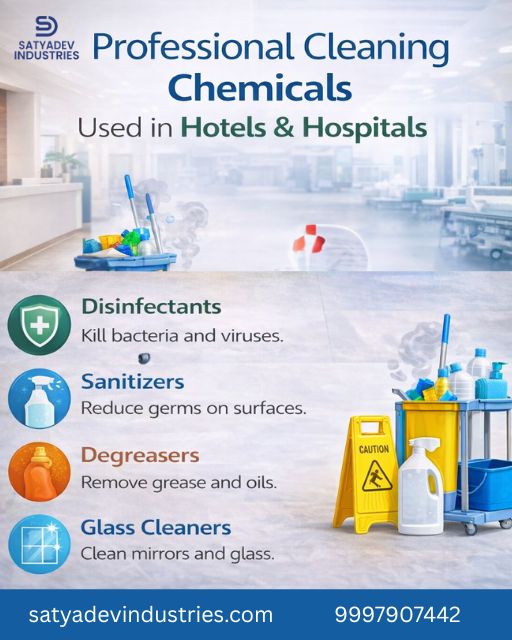
Hotel vs Hospital vs Factory Cleaning Needs
| Facility Type | Primary Requirement | Recommended Solution |
|---|---|---|
| Hotels | Appearance + hygiene | Floor, glass & bathroom concentrates |
| Hospitals | Infection control | Disinfectants + controlled dilution |
| Factories | Heavy grease & oil | Alkaline & solvent cleaners |
| Offices | Daily maintenance | Neutral surface cleaners |
| Restaurants | Food safety | Kitchen degreasers |
Hotels, hospitals, and institutions depend on consistent quality and safety standards, which is why many choose commercial cleaning chemicals supplied by Satyadev Industries.
Such facilities typically partner with an experienced industrial cleaning chemicals manufacturer in India to ensure uninterrupted supply, compliance, and performance consistency.
Which Cleaning Solution Is Right for You?
| Buyer Type | Product Type | Buying Focus |
|---|---|---|
| Household | Ready-to-use | Convenience |
| Commercial | Concentrates | Cost control |
| Industrial | High-strength | Performance |
Free Download – Complete Cleaning Chemicals Guide (PDF)
Free Download – Complete Cleaning Chemicals Guide (PDF)
To help facility managers, housekeeping teams, and bulk buyers choose the right products, we have created a free downloadable Cleaning Chemicals Guide PDF that includes:
- Types of cleaning chemicals and their practical uses
- Surface-wise product selection chart for bathrooms, floors, glass, kitchens, and industries
- Safe dilution ratios and chemical handling guidelines
- Professional cleaning checklist for hotels, hospitals, offices, and factories
👉 Click here to download the Free Cleaning Chemicals Guide PDF
(Download will start instantly in a new tab.)
This ready-to-use reference guide helps you:
- Select the correct cleaning chemical for every surface
- Improve hygiene compliance in commercial facilities
- Prevent chemical misuse and surface damage
- Compare professional cleaning chemicals with retail products
The guide is especially useful for HORECA facilities, hospitals, industrial housekeeping teams, and commercial cleaning professionals looking for safe, cost-effective, and high-performance cleaning solutions
Frequently Asked Questions on Cleaning Chemicals
What are cleaning chemicals?
Cleaning chemicals are formulated substances used to remove dirt, grease, stains, and microorganisms from surfaces to maintain hygiene in homes, businesses, and industrial environments.
What is the importance of cleaning chemical?
They help control germs, remove stubborn dirt, improve hygiene standards, and protect surfaces from long-term damage.
What are the main types of cleaning chemicals?
The main types include acidic cleaners, alkaline cleaners, neutral cleaners, solvent-based cleaners, and disinfectants.
Which cleaning chemical do you suggest to use in the bathroom?
Bathrooms should be cleaned with acids as this type of cleaning chemical is effective in eliminating hard water stains, limescale, soap scum, and mineral deposits.
Which cleaning chemical is safe for daily floor cleaning?
Neutral floor cleaners are the safest ones to be used in cleaning the floor on daily basis since they are effective cleaners that do not destroy tiles or marble among other sensitive surfaces.
Which is the difference between the acidic and non-acidic cleaners?
Acidic cleaners are used to remove mineral deposits and hard water stains whereas non acidic cleaners are less aggressive and are used in routine cleaning and delicate surfaces.
Are cleaning chemicals used in industries safe?
When properly diluted and used within instructions and safety guidelines of the manufacturer, the cleaning formulations of industries are safe.
What are cleaning chemical that are environmentally friendly?
Eco-cleaning products are produced using biodegradable chemicals and are less harmful to human beings, surfaces, and the environment.
Do cleaning chemical destroy surfaces?
Yes, it may impair surfaces with the use of the wrong product or when the concentration of chemicals is excessively high or when they are mixed up.
What is the way to store cleaning chemical?
One should keep these chemicals in closed containers, out of heat and sunlight, food, and children.
Conclusion on Choosing the Right Cleaning Chemical in 2026
Getting the correct cleaning solution in 2026 is not about buying the strongest product is not about using the strongest product, but about selecting the correct formulation for the right surface. Proper dilution, safe handling, and correct selection ensure better hygiene, lower costs, and long-term surface protection.
🔗 Related Cleaning Chemical Solutions
For professional cleaning results across homes, hotels, hospitals, and industries, explore our complete range of cleaning chemicals:
- Bathroom Cleaner Chemical – for tiles, basins, and washrooms
- Toilet Bowl Cleaner for Hard Water Stains – deep cleaning and odor control
- Floor Cleaner Concentrate for Commercial Use – ideal for hotels and offices
- Streak Free Glass Cleaner Liquid – for mirrors, windows, and glass partitions
- Heavy Duty Kitchen Degreaser – removes oil and carbon buildup
- Safe and Eco Friendly Cleaning Chemical – for daily and green cleaning
- Industrial Cleaning Chemical Manufacturer in India – trusted professional solutions
📌 All products are available in concentrated formulations for cost-effective and high-performance cleaning.
References & Sources
The information shared in this guide is compiled using industry best practices, professional cleaning standards, and globally recognized hygiene guidelines to ensure accuracy, safety, and reliability.
Industry Standards & Technical References
- World Health Organization (WHO) – Guidelines on cleaning, disinfection, and sanitation in public and healthcare facilities
- Centers for Disease Control and Prevention (CDC) – Recommendations for surface cleaning and disinfection
- Occupational Safety and Health Administration (OSHA) – Chemical safety, handling, and workplace hygiene standards
- European Chemicals Agency (ECHA) – Classification of chemical substances and safe usage guidelines
Professional Cleaning & Hygiene Bodies
- International Sanitary Supply Association (ISSA) – Best practices for commercial and industrial cleaning
- British Institute of Cleaning Science (BICSc) – Professional cleaning methods and chemical usage standards
Regulatory & Safety Documentation
- Material Safety Data Sheets (MSDS / SDS) from professional cleaning chemical manufacturers
- Bureau of Indian Standards (BIS) – Safety and quality standards relevant to cleaning products in India
Industry Experience & Manufacturer Knowledge
- Insights derived from professional-grade formulations, real-world applications in hotels, hospitals, offices, and industrial facilities, and technical documentation provided by experienced industrial cleaning chemicals manufacturers in India.
👤 Author Bio
Nitesh Gupta is a cleaning industry professional with hands-on experience in industrial, commercial, and institutional cleaning solutions. He works closely with manufacturers, facility managers, and housekeeping teams to develop effective, safe, and cost-efficient cleaning chemical formulations for hotels, hospitals, offices, and industries across India.
🏢 Editorial & Brand Expertise Note
This article is reviewed and published by Satyadev Industries, a trusted industrial cleaning chemicals manufacturer in India, specializing in professional-grade concentrates for bathrooms, floors, kitchens, glass, and hygiene-critical environments.
All recommendations are based on real-world usage, industry standards, and professional cleaning best practices, ensuring accuracy, safety, and relevance for 2026 cleaning requirements.
Trust & Content Disclaimer
This content is intended for educational and informational purposes only. Always follow manufacturer instructions, dilution guidelines, and safety recommendations while using any cleaning product. For sensitive environments such as hospitals and food processing areas, consult professional cleaning experts.
